A Daily System to Reduce Stress and Anxiety
When your mind feels crowded, the goal is not doing more. The goal is creating a simple daily structure that lowers uncertainty and supports calm.
People dealing with high stress, overthinking, or emotional spikes who need a grounded routine that is easy to maintain.
What Keeps Stress Cycles Running
Anxiety tends to grow when your routines are scattered and your day has no calming structure.
Your coping tools live in different apps, so you stop using them when stress rises.
You cannot identify recurring triggers because your notes and routines are scattered.
Your task list grows during anxious periods and makes everything feel heavier.
One Calm-Centered Daily Structure
Use the same product components, but framed for emotional regulation: trigger notes, calming habits, and low-pressure task planning.
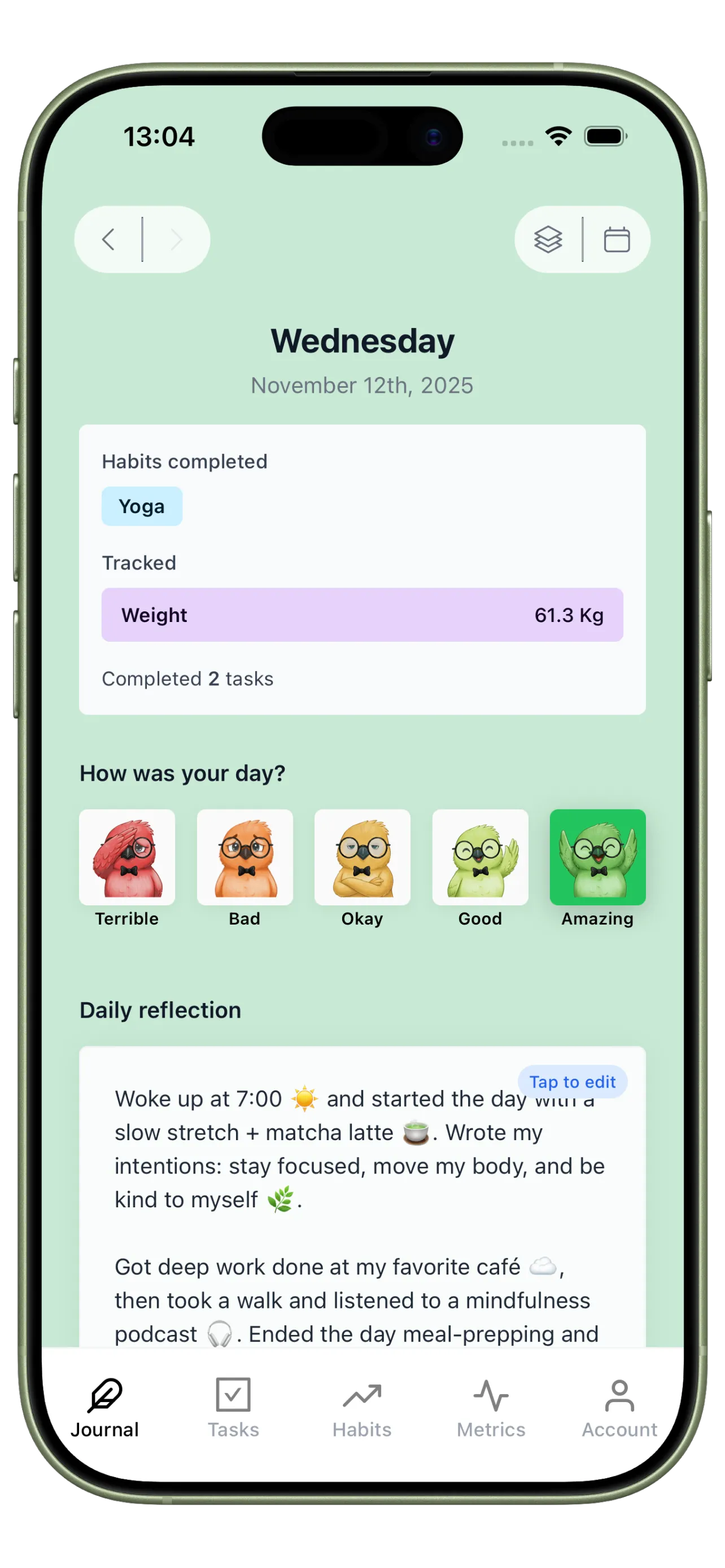
Mood and Trigger Journal
Use Journal to capture emotional patterns and triggers while they are fresh. This builds self-awareness without long writing sessions.
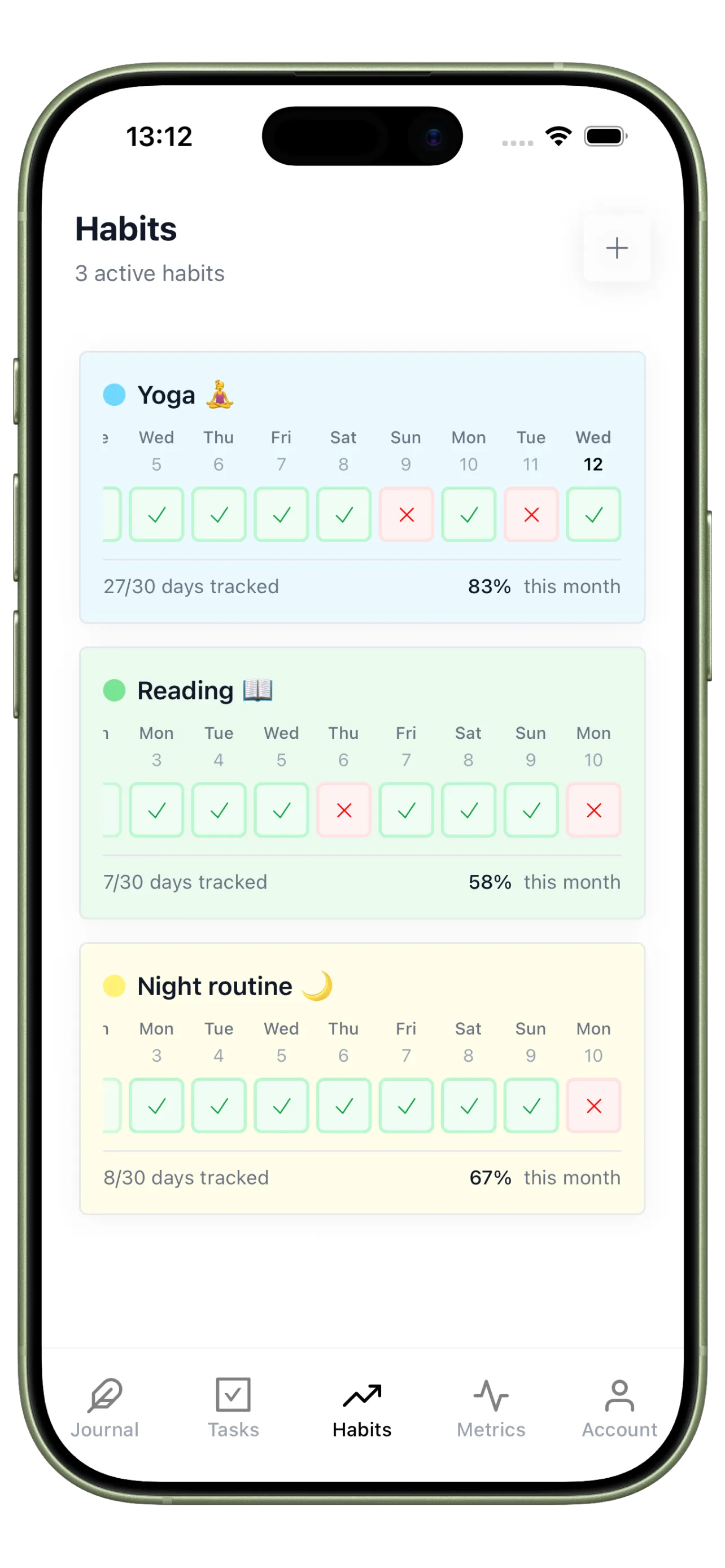
Calming Habit Tracker
Use Habits for calming behaviors like walking, breathwork, and caffeine cutoffs. Repetition reduces volatility.
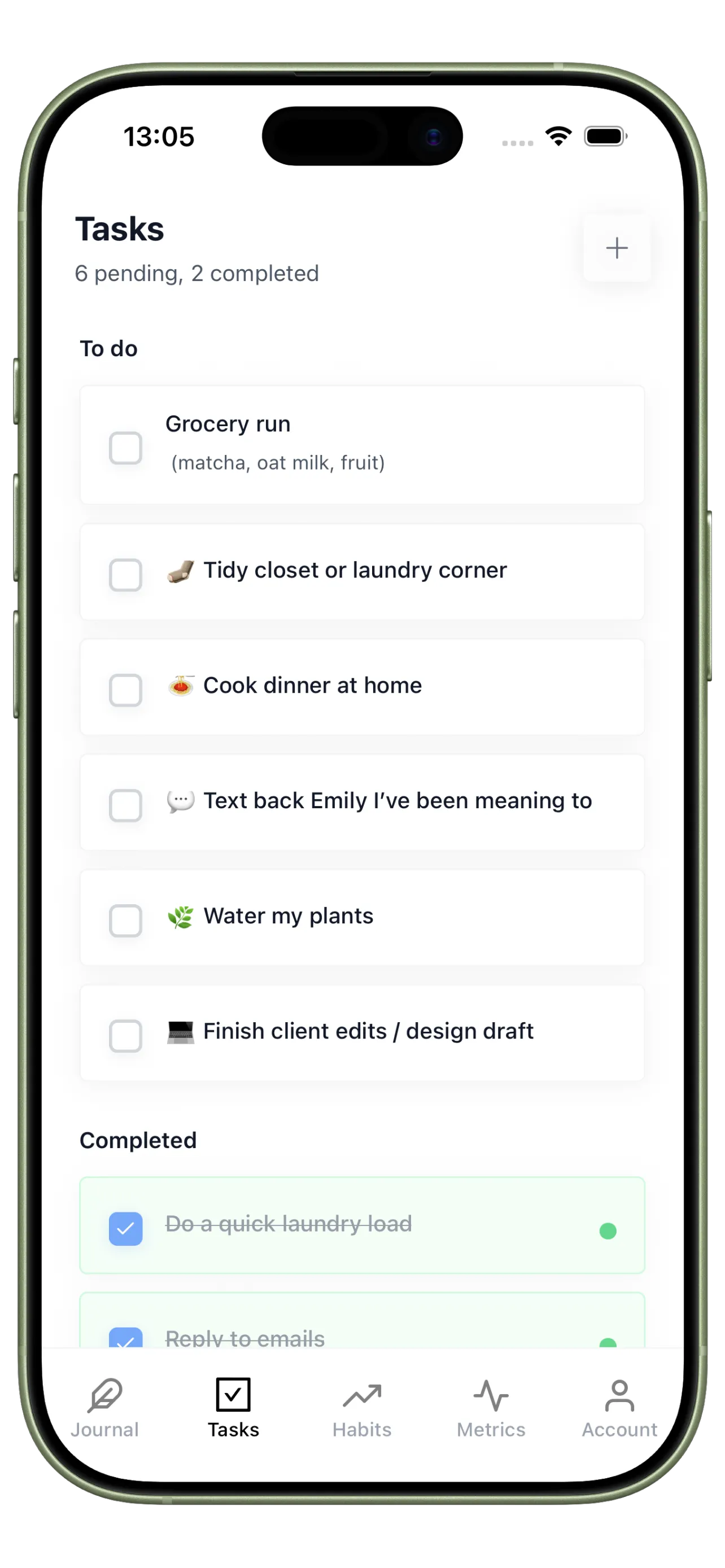
Low-Pressure Priority Tasks
Use Tasks to keep your day realistic. A short list protects mental bandwidth and prevents overwhelm from open loops.
Your 4-Step Daily Calm Protocol
Keep steps small and repeatable so the routine still works on high-stress days.
Step 1
Create 2 calm habits
Start with a short breathing reset and a consistent sleep wind-down. Keep both habits intentionally small.
Step 2
Log mood in one minute
Write how you felt, what triggered it, and what helped. Repeat this daily for clean signal over time.
Step 3
Limit tasks to a short list
Pick three priority actions to reduce decision fatigue and avoid anxiety-driven task sprawl.
Step 4
Review trends weekly
Look for patterns between sleep, routines, and stress levels. Keep what works and remove what adds pressure.
See What Actually Lowers Anxiety
Visual tracking helps you connect sleep, routines, and stress patterns over time.
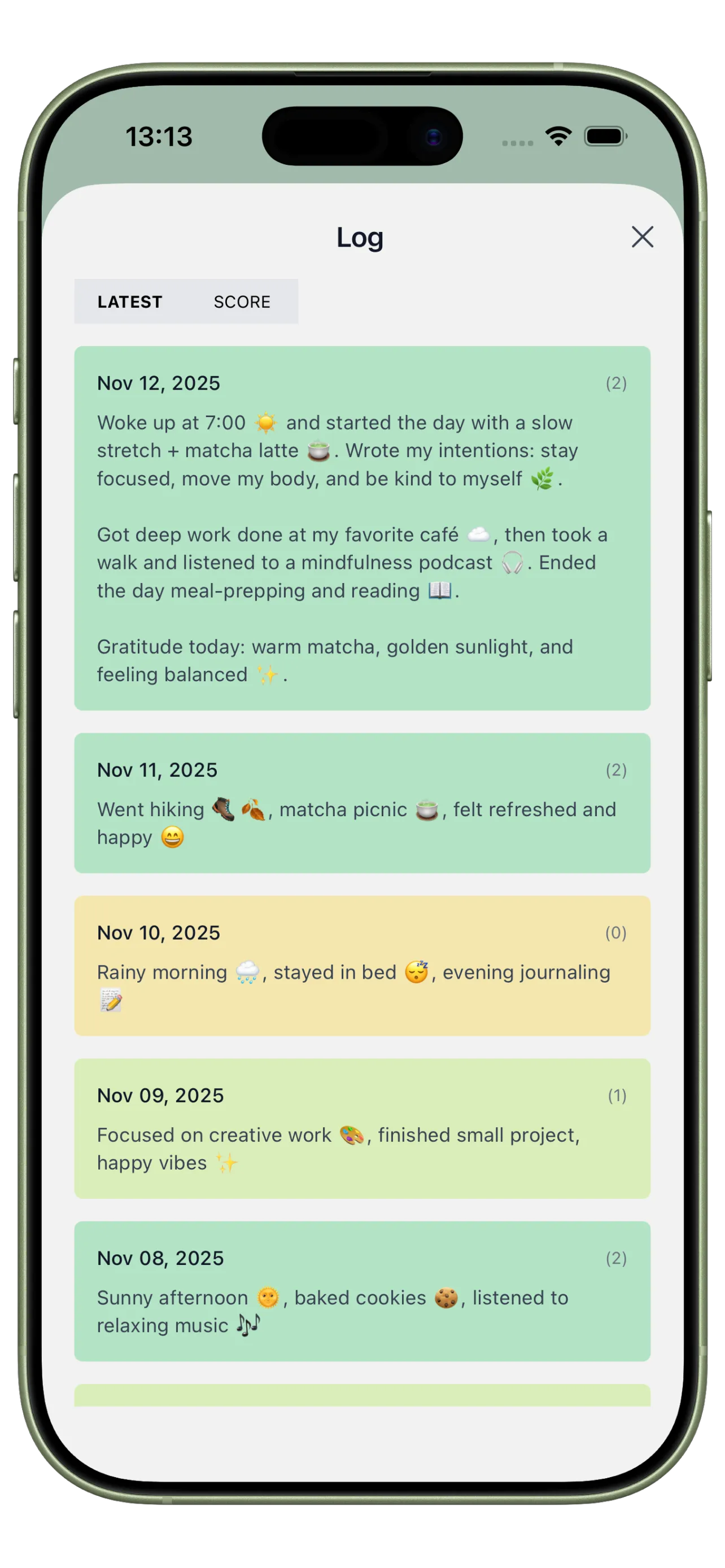
Mood Timeline Log
Track emotional highs and lows with context so recurring triggers are easier to identify.
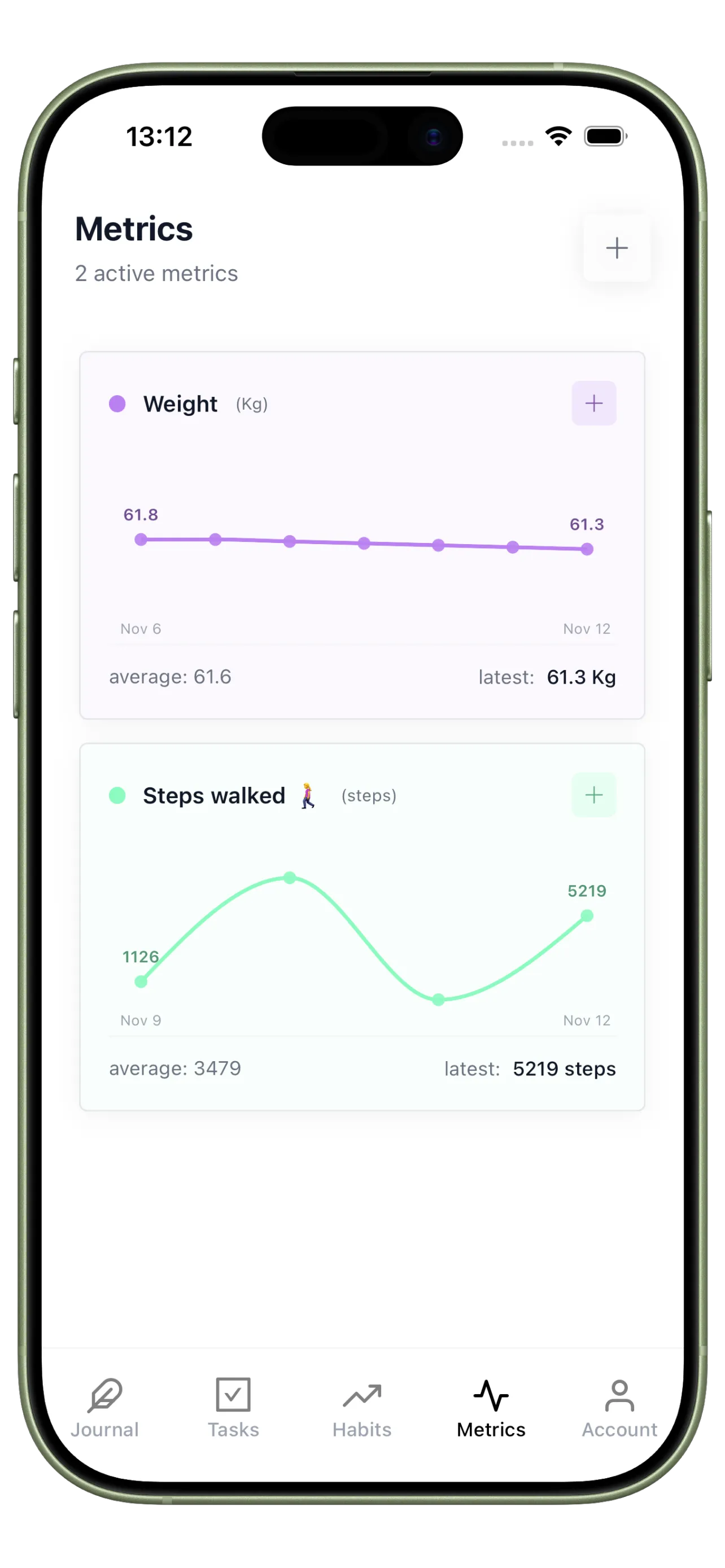
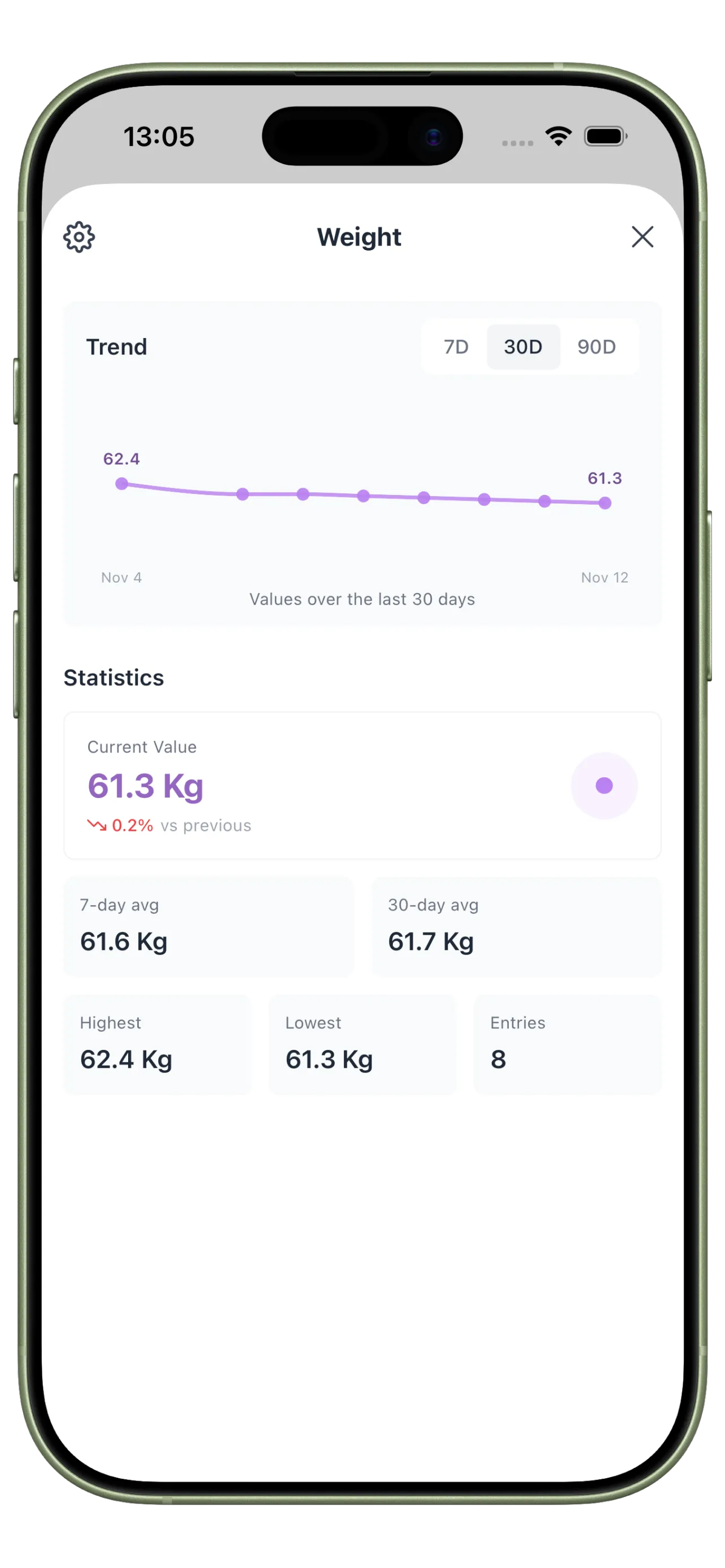
Stress Signal Trends
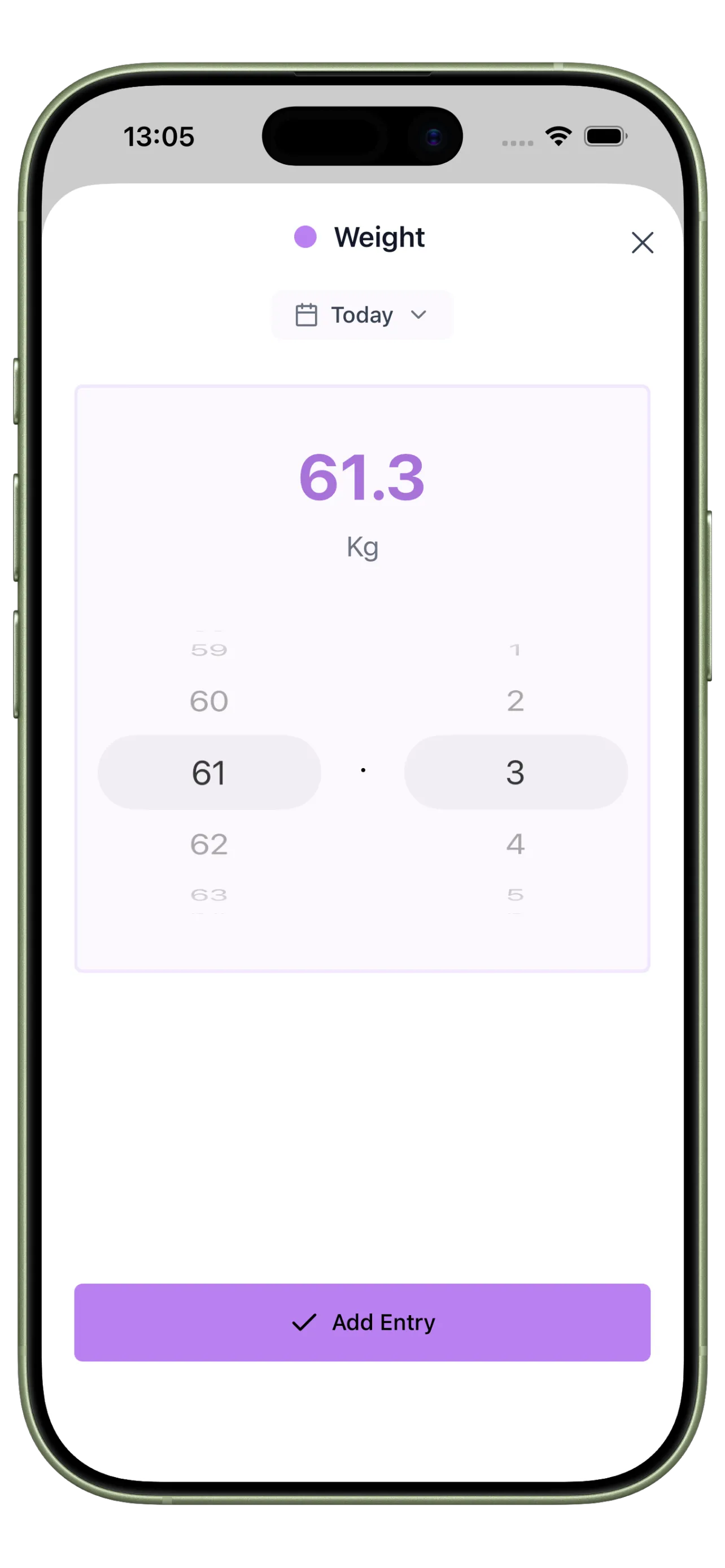
Log stress score, sleep duration, or caffeine intake to find which levers improve your state.
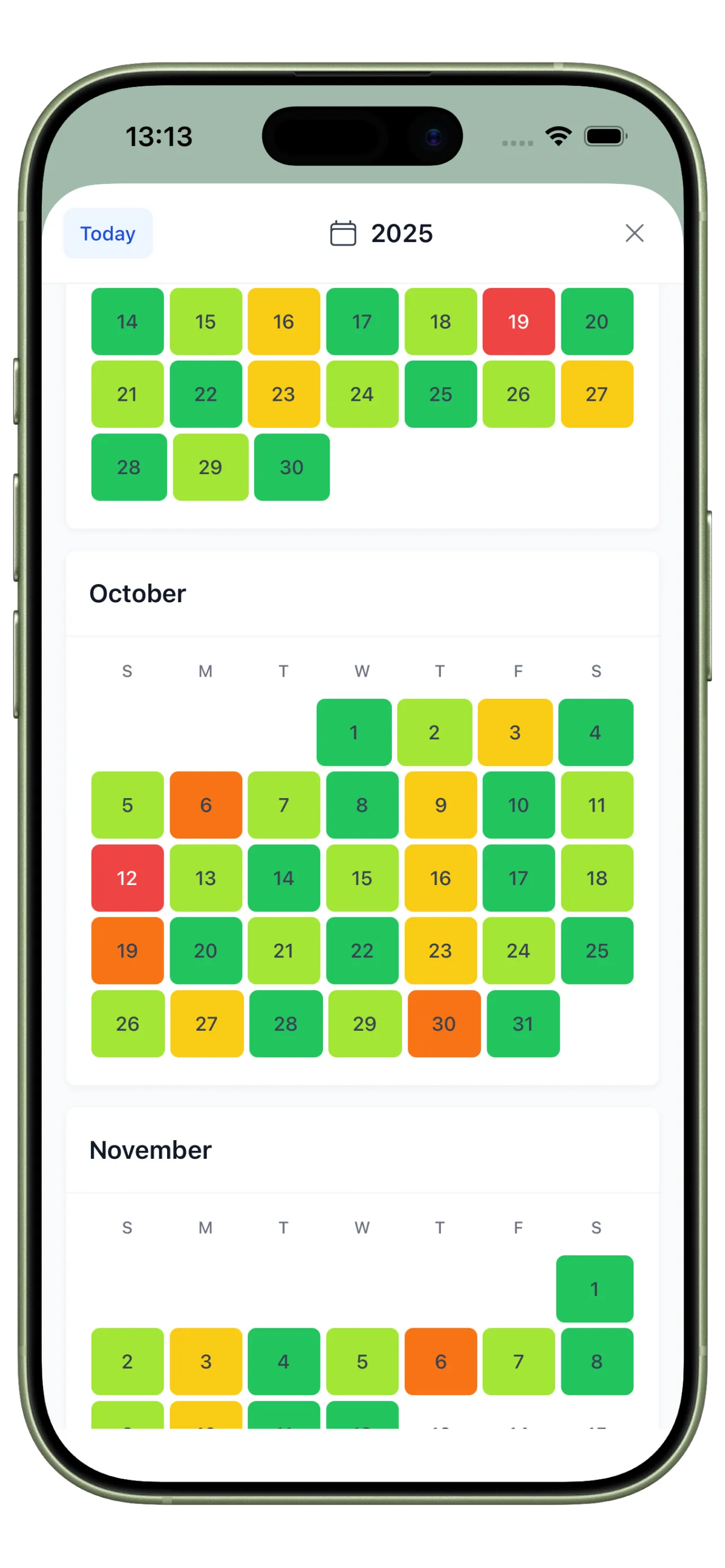
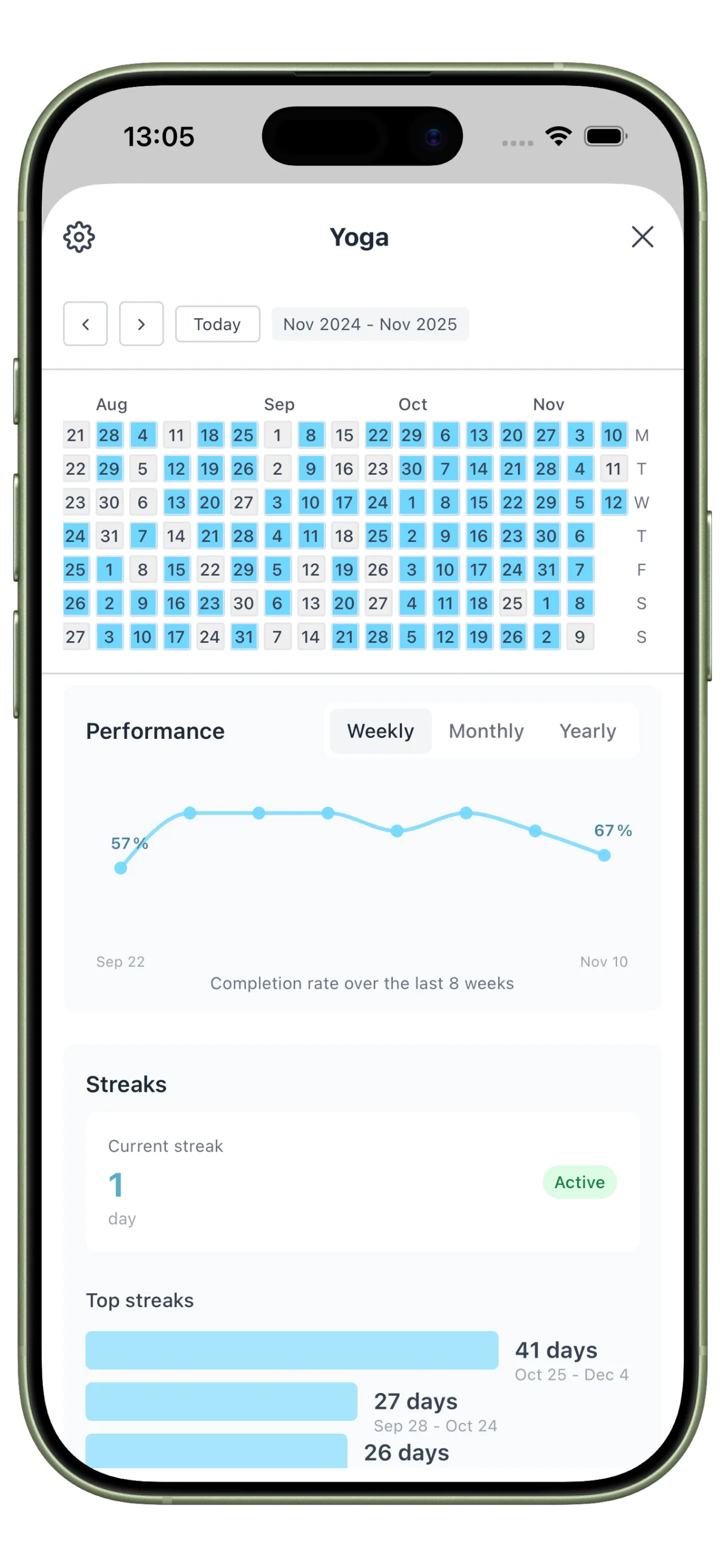
Calm Habit Calendar
Use heatmap consistency to keep breathwork, walks, and wind-down routines visible and repeatable.
From Overwhelm to Predictable Calm

Before: Reactive Days
Stress spikes dictate your day, and tools are too fragmented to use when you need them most.

After: Regulated Days
One gentle system gives you structure, clarity, and faster recovery from stressful moments.
Stress and Anxiety Routine FAQ
Is this a therapy replacement?
No. It is a daily structure tool. It can complement therapy, coaching, or other care by making day-to-day patterns easier to notice.
How often should I journal for stress?
Once per day is enough to start. Consistent short entries are more useful than occasional long entries.
What is the first calming habit to add?
Choose the smallest action you can repeat daily, such as three minutes of breathing or a short evening walk.
Build a Calmer Daily Baseline
Create less internal noise with a routine that helps you feel safer and more in control each day.