Life Audit: A Yearly Reflection Template to Design Your Next 12 Months
Most yearly goals fail because they start with ambition and skip reflection.
A yearly life audit fixes that. Instead of asking, "What should I do next year?" you first ask, "What actually worked this year, and why?"
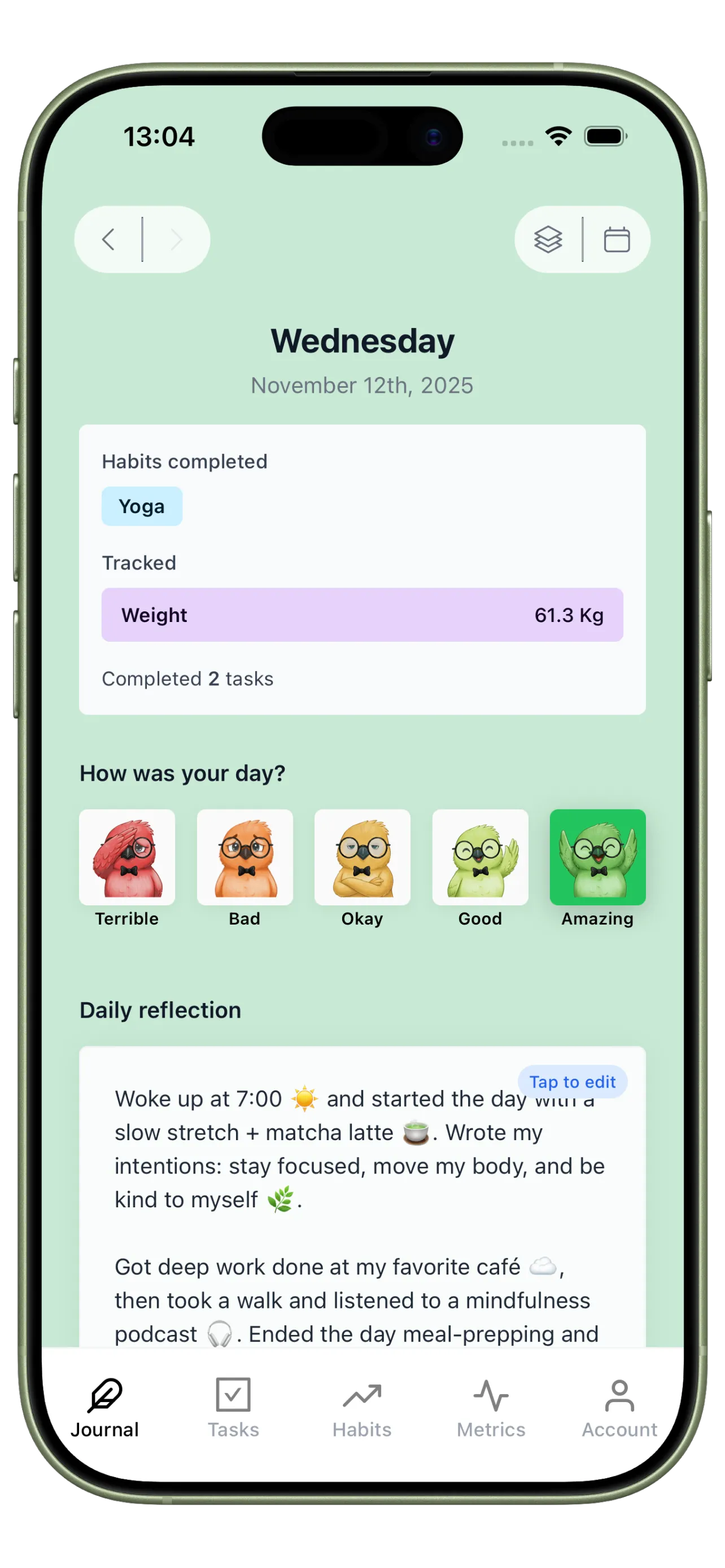
In Three Cells, your daily history gives you the raw material for that answer.
Step 1: Pattern recognition before goal setting
Review your year and identify your "vital few" behaviors:
- Which habits produced the biggest quality-of-life gains?
- Which recurring commitments created the most friction?
- Which projects created meaningful progress?
Do not guess. Use your own data.
People join Three Cells to get more energy, confidence, structure, and peace of mind. The app turns that intent into a simple daily system you can actually stick to.
Step 2: Run a values alignment check
Many people burn out not because they work hard, but because they work out of alignment.
Pick your top 3-5 values, then audit your calendar and task history against them.
If you value health but your schedule repeatedly sacrifices sleep and movement, the mismatch is clear. Your system is violating your values.
A life audit helps you close that gap.
Step 3: Convert insight into design
Reflection without system design creates temporary motivation and no durable change.
Translate your audit into concrete operating rules:
- Define weekly focus windows for high-value work.
- Add non-negotiable recovery blocks.
- Build simple habit stacks around existing routines.
- Set "minimum viable" versions for stressful weeks.
This is how intentions become infrastructure.
See your whole day in one place

Step 4: Use better yearly questions
Use prompts that produce decisions, not vague journaling:
- What were my three most meaningful wins, and what made them possible?
- Where did I repeatedly delay, and what friction caused it?
- Which 20% of actions created 80% of my results?
- What should I stop doing immediately next year?
- What would make next year feel deeply aligned, not just busy?
These questions force strategic clarity.
Step 5: Build your next-year operating system
Create a lightweight system you can actually run:
Quarterly themes: one theme per quarter.Monthly focus: one strategic outcome per month.Weekly review: check alignment and adjust.Daily loop: plan, execute, reflect in one home base.
Keep it simple enough to survive real life.
A practical yearly audit checklist
Use this checklist in your final review week:
- Export or review your full year timeline.
- Tag wins, friction points, and missed opportunities.
- Finalize core values for the next year.
- Remove commitments that do not align.
- Design your first 30 days with clear habits and focus blocks.
Then start small and execute.
Final thought
A life audit is not about perfection. It is about honest signal.
When you review your year with clarity, align with your values, and design a workable system, you stop drifting and start building intentionally.
If you want next year to be different, do not just set goals. Build a better operating model for your life.