How Do I Become More Consistent? A Simple System That Actually Lasts
A practical guide to becoming more consistent without relying on motivation, complicated routines, or starting over every Monday.

Pick one identity you want to reinforce, such as becoming healthy, focused, calm, or disciplined
Choose one tiny daily action that proves that identity
Track it every day in a visible place
Most people do not fail at consistency because they are lazy. They fail because their system only works on easy days. It works when they feel motivated, slept well, have spare time, and life is calm. Then a busy day arrives, the routine breaks, and the whole identity collapses with it.
Consistency is not about doing the perfect version of a habit every day. It is about keeping the relationship with the habit alive. The goal is to build enough daily proof that you can trust yourself again.
Quick Answer
- Pick one identity you want to reinforce, such as becoming healthy, focused, calm, or disciplined.
- Choose one tiny daily action that proves that identity.
- Track it every day in a visible place.
- Use a minimum version for difficult days.
- Review your pattern weekly instead of judging yourself daily.
Start with proof, not ambition
Ambitious plans feel exciting, but consistency is built by proof. If you want to become a person who trains, the first proof might be ten push-ups. If you want to become a reader, it might be two pages. If you want to become calmer, it might be one minute of reflection.
The action should be small enough that it survives a bad day. You can always do more, but you should not need a perfect day to keep the chain alive.
Track the streak, but learn from the pattern
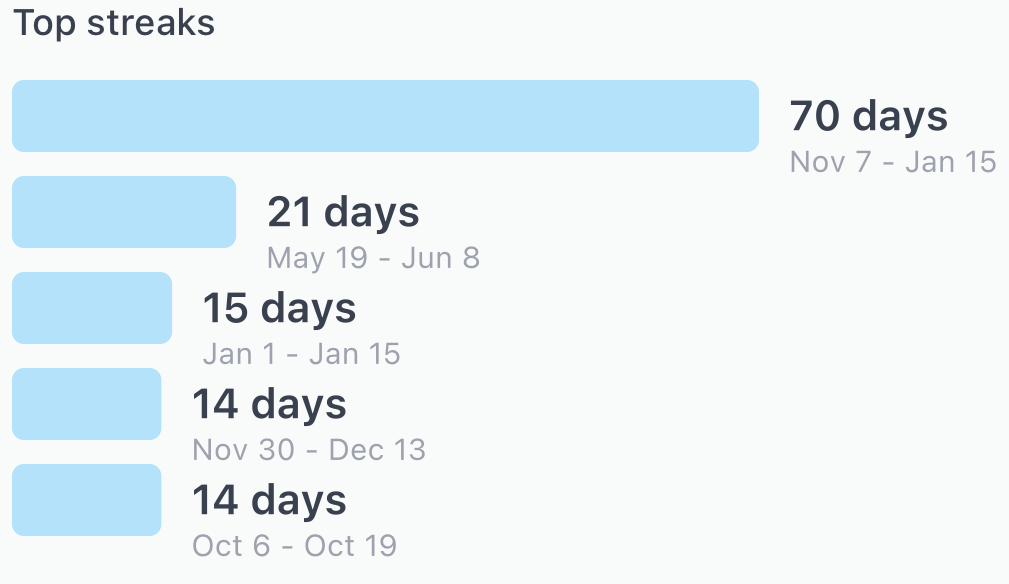
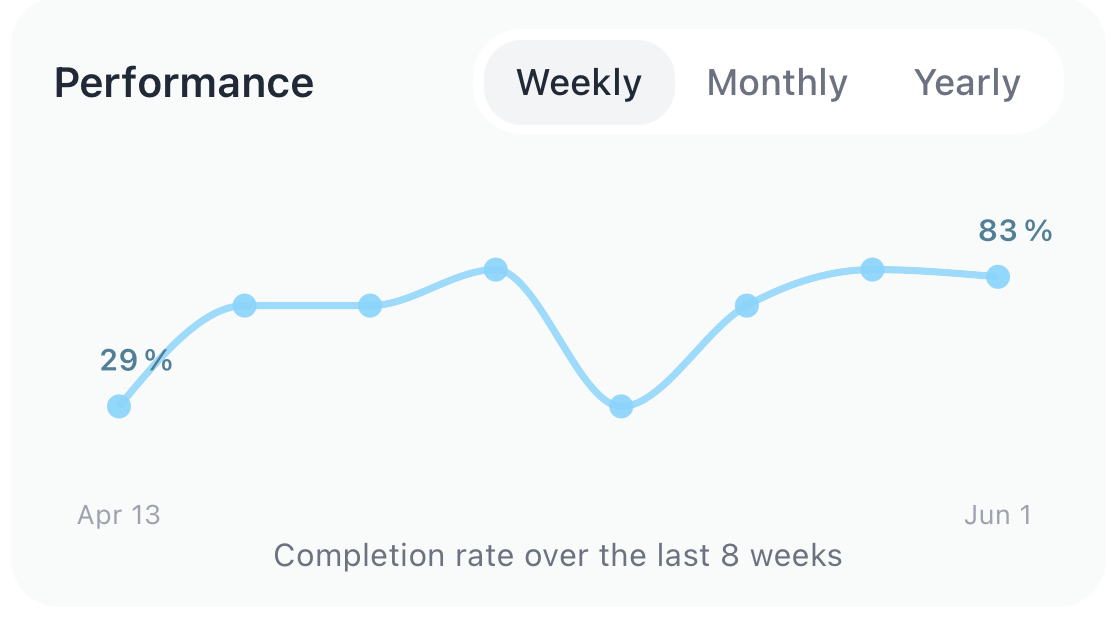
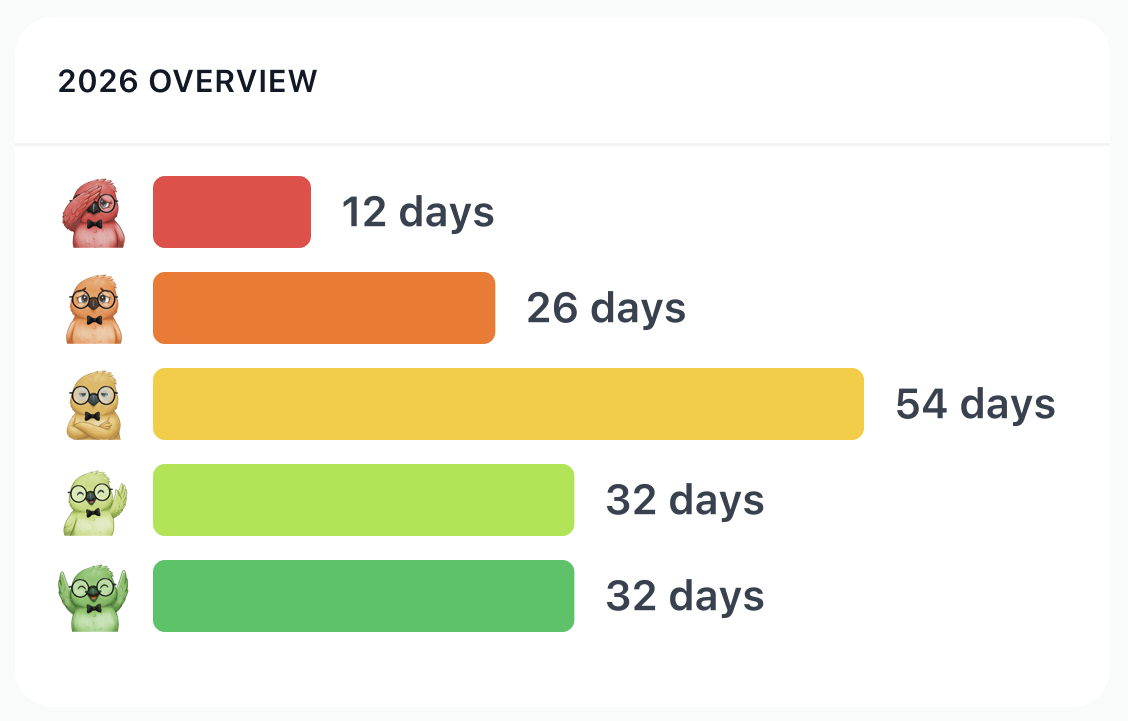
A streak gives you a reason to return tomorrow. A pattern tells you why some days work better than others. Track the action, but also log a simple mood or reflection so you can see the context behind your consistency.
After a few weeks, you may notice that your best days follow a repeatable shape: earlier sleep, fewer distractions, a short walk, or checking in before work. That is more useful than a vague promise to try harder.
Create a fallback version before you need it
The question is not whether you will have low-energy days. You will. The question is whether those days destroy the habit. Create a fallback version for every habit: one set, one page, one sentence, one minute.
This is not cheating. It is how you protect identity. You are telling yourself, 'I still showed up.'
Common Mistakes
- Tracking ten habits before one habit has become stable.
- Restarting the whole system after one missed day.
- Only measuring outputs, such as weight or revenue, instead of daily actions.
- Using a tool that takes longer to maintain than the habit itself.
Where Three Cells Fits
Three Cells is built around a fast daily check-in for habits, mood, and progress, so it works well for consistency because it turns small daily actions into visible proof.
The important thing is that the advice becomes a daily ritual, not a note you forget. A simple system gives the habit somewhere to live.

Turn the advice into visible proof.
Three Cells gives you one daily check-in for habits, mood, reflection, tasks, and metrics, so your effort becomes a record you can actually trust.


You can also read more Three Cells guides on the blog, including practical posts on habits, journaling, routines, and long-term consistency.