Habit Stacking: Use Zeigarnik Effect and Loss Aversion to Stay Consistent
Willpower is unreliable. Systems are reliable.
If you have ever started strong and then quietly stopped after two weeks, your problem is not motivation. Your system is too fragile.
In 2026, the best habit systems combine behavioral psychology with low-friction execution. Three Cells is built for exactly that: habits, tasks, and reflection in one daily flow.
The Zeigarnik Effect: your brain wants closure
The Zeigarnik Effect says unfinished tasks stay active in your mind.
In plain language: open loops create tension.
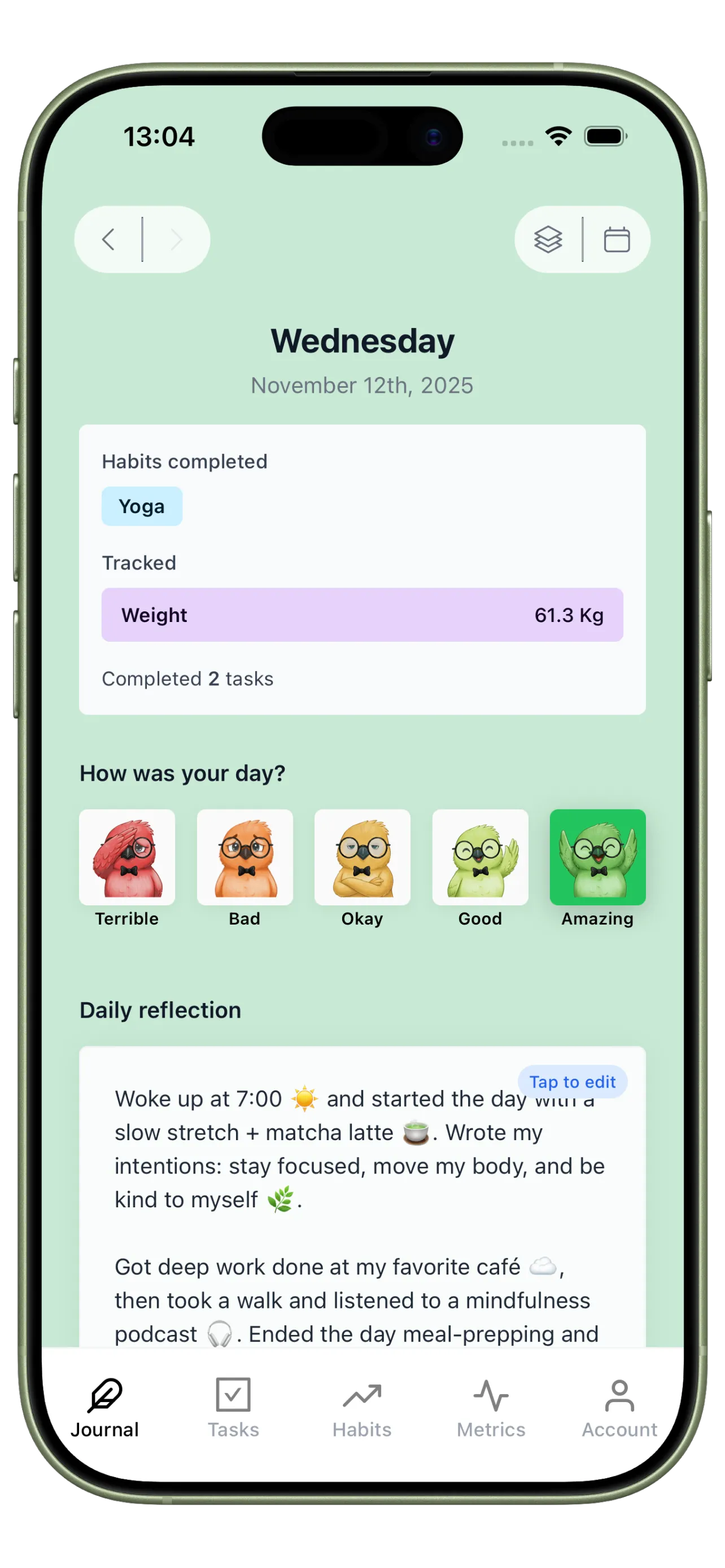
A visible habit checklist in your daily timeline keeps that loop open until you complete it. That tension is useful. It nudges action without constant self-talk.
When the habit is done, the loop closes and your brain gets relief.
People join Three Cells to get more energy, confidence, structure, and peace of mind. The app turns that intent into a simple daily system you can actually stick to.
Loss aversion: protect the streak
Loss aversion means losing something feels worse than gaining something feels good.
That is why streaks work. Once you build momentum, breaking the chain feels costly.
The trick is to use this force without creating burnout:
- Track only a few core habits.
- Keep daily completion easy.
- Have a fallback version for bad days.
The fallback version is critical. If "workout" becomes impossible on a chaotic day, do a 2-minute version to preserve identity and continuity.
Habit stacking: attach new behavior to old behavior
Habit stacking uses existing routines as triggers.
Use this formula:
When I [existing habit], then I will [new tiny habit].
Examples:
- When I finish my morning coffee, then I will write one line of gratitude.
- When I close my laptop, then I will review tomorrow's top three tasks.
- When I brush my teeth, then I will do two minutes of mobility.
This works because you borrow a stable cue instead of relying on random motivation.
See your whole day in one place

Design habits for low-energy days
Most habit plans fail because they only work on ideal days.
Design for your worst day, not your best:
- Define a "minimum viable habit" for each routine.
- Remove extra steps from tracking.
- Keep the habit visible in your daily view.
- Review missed days without self-judgment.
Consistency grows when friction is low and recovery is fast.
Metrics that actually matter
Do not overcomplicate your dashboard. Track four things:
- Streak length: Are you maintaining continuity?
- Completion rate: Are you showing up most days?
- Friction notes: Why did misses happen?
- Recovery speed: How quickly do you restart?
These metrics tell you whether your system is robust.
A practical 7-day setup in Three Cells
- Pick 3 habits max.
- Define a tiny fallback for each one.
- Add one clear trigger for each habit.
- Track daily with one tap.
- Run a weekly reflection and adjust friction.
By week two, you will know which habits are structurally sound and which ones need redesign.
Final thought
Sustainable change is not about feeling inspired every morning.
It is about designing a system where consistency is easier than quitting.
Use the Zeigarnik Effect to keep loops open, loss aversion to protect momentum, and habit stacking to make action automatic. Then let your daily timeline do the rest.