Emotional Resilience: Journaling for Stress Recovery and Better Decisions
Productivity without emotional stability does not last.
When stress accumulates, people do not just feel worse. They think worse. Decisions get reactive, communication gets sharper, and focus gets shallow.
That is why journaling is no longer a "nice to have." It is one of the simplest resilience practices you can run daily.
Journaling as emotional processing
Unprocessed stress lingers. It shows up as overthinking, irritability, and avoidance.
Writing creates psychological distance. You move an emotion from a vague internal sensation to a concrete narrative you can evaluate.
In practice, this means:
- Less mental noise.
- Better emotional regulation.
- Faster recovery after hard days.
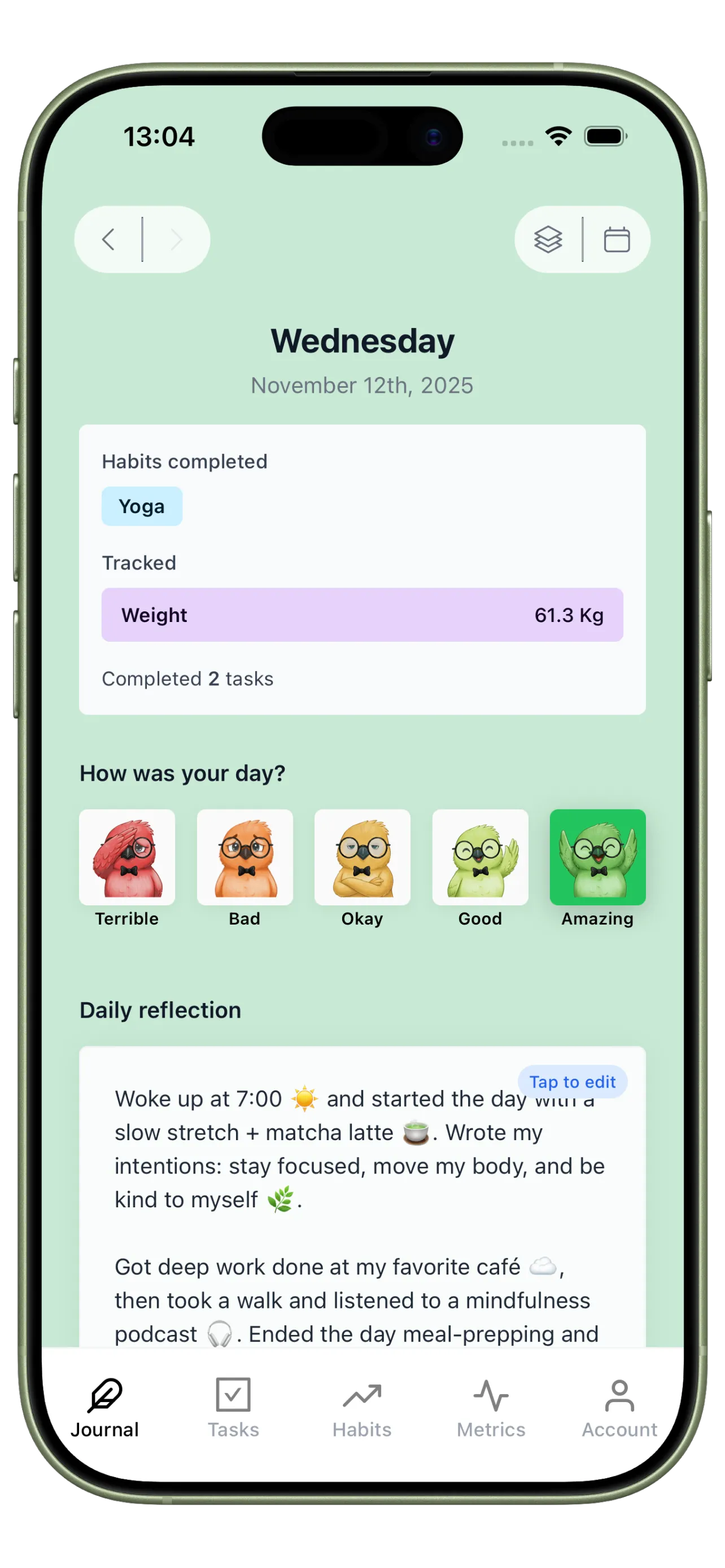
People join Three Cells to get more energy, confidence, structure, and peace of mind. The app turns that intent into a simple daily system you can actually stick to.
From distress to direction
After difficult meetings, missed deadlines, or personal setbacks, most people replay events in loops.
A resilience journal interrupts that loop with structure:
- What happened?
- What did I feel?
- What mattered most?
- What is one next step?
This turns emotional friction into forward motion.
Build an evidence-based self-image
Confidence should come from evidence, not hype.
When you journal consistently over months, you create a record of:
- Problems you handled.
- Skills you improved.
- Patterns you changed.
That record becomes a "confidence reservoir" you can draw from when new challenges hit.
See your whole day in one place

Daily protocols for mental fitness
Use a morning and evening protocol:
Morning (2-3 minutes):
- Set one intention for how you want to show up.
- Choose one key stressor to handle calmly.
Evening (5 minutes):
- Write one stress event and your response.
- Reframe one unhelpful thought.
- Note one thing that went better than expected.
This "bookend" rhythm stabilizes your nervous system and prevents stress carryover into the next day.
Use Stoic prompts for composure
Stoic reflection works well in high-pressure periods. Try these prompts:
- What is in my control right now?
- What story am I telling that may not be true?
- What would a calm, capable version of me do next?
These questions reduce emotional reactivity and improve strategic thinking.
Why integrated journaling matters
If journaling is isolated from your tasks and habits, insight often dies in a separate app.
In Three Cells, reflection sits beside action. You can process emotion, then immediately align tomorrow's priorities inside the same daily workflow.
That bridge between insight and execution is the core advantage.
Final thought
Resilience is not built in motivational moments. It is built in ordinary days when you choose to process, reframe, and continue.
A short daily journal can become your most practical mental fitness tool. Use it to recover faster, lead better, and stay steady when life gets noisy.