I Journaled Every Day for 8 Months Straight, and It Actually Changed Me
CASE STUDY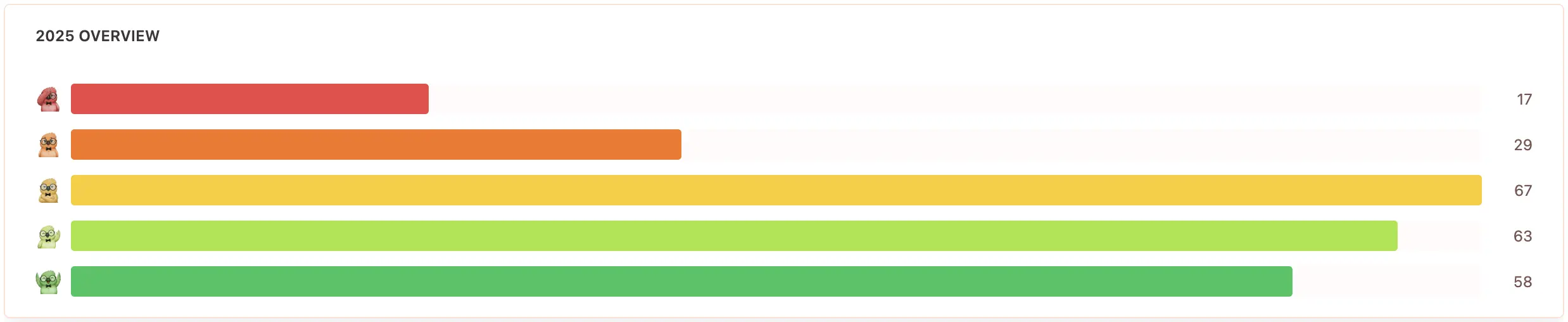
I always thought journaling was a waste of time. Or at least, a massive hassle. The idea of sitting down every night to write "Dear Diary" just didn't appeal to me. It felt like too much work for very little payoff.
I had tried standard journaling before—the long, narrative daily entries—and always quit after a week. The blank page felt like a chore, not a tool.
Then, earlier this year, I saw an interview with Jim Collins (the author of Good to Great). He mentioned that he's been tracking his days for years. But his method wasn't about writing pages of thoughts. It was shockingly simple.
The -2 to +2 Rule
Collins' system isn't about deep prose or analyzing your feelings. It's about data. He tracks his days by simply describing what he did and then rating them on a scale from -2 to +2.
| Score | Meaning |
|---|---|
| +2 | Absolutely Fantastic Day |
| +1 | Good Day / Successful |
| 0 | Neutral / Average Day |
| -1 | Bad Day / Frustrating |
| -2 | Terrible Day / Disaster |
I thought, okay, I can do this. So, each day I just jotted down what I did and gave it a score.
See your whole day in one place

From Guessing to Knowing
After a couple of months, this simple habit actually changed me. I wasn't just recording the days; I started seeing patterns. My days stopped being random events.
1. The Recipe for a Good Day
Now I can see exactly what my best days look like. By looking back at every +2 and +1 day, I found a clear recipe for my own happiness:
- Working out: Always happened on good days.
- Deep Work: A solid block of focused time.
- Social Connection: Intentional time with friends or family.
- Rest: At least 7 hours of sleep.
Before, I lived my days doing things I thought were good for me. Now I actually know what makes me happy. I'm pretty sure I'll have a happy life if I just stick to the things in my +2 column.
2. Spotting the Bad Habits
On the flip side, reviewing the -1 and -2 days showed me my triggers. Bad days almost always involved too much screen time, no exercise, or bad sleep. Seeing this data helped me catch myself before a bad day turned into a bad week.
People join Three Cells to get more energy, confidence, structure, and peace of mind. The app turns that intent into a simple daily system you can actually stick to.
Removing Friction
I've built this habit now, and I don't plan on stopping. But to stay consistent, I had to make it easy.
I started with a notebook, which was great for momentum. But eventually, I started forgetting it, or it was just annoying to carry around.
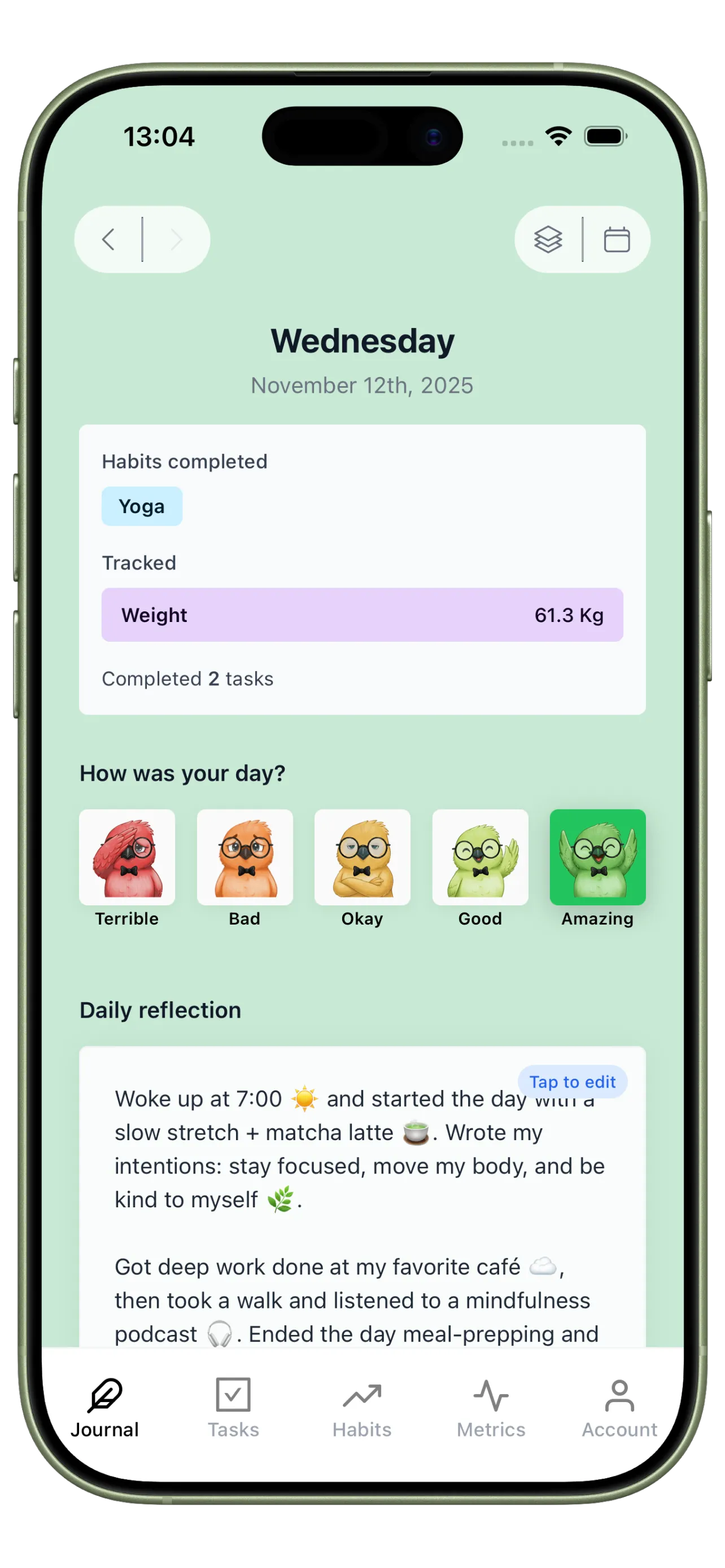
To make it even easier, I moved to a dedicated tool. I use Three Cells. It has a mobile app and a web version, so I can log my day in seconds. The instant visual feedback (like the heatmap) makes it satisfying to keep the streak going.
Conclusion
If you're like me—skeptical about journaling—I promise you, this method is different. You don't need to write a memoir. You just need to collect simple data points on your life.
Stop guessing what makes you happy and start tracking it. This simple, 5-minute audit turned self-improvement from a vague idea into a real process for me.